From the archive: AI commentary I wrote in late 2024 and early 2025
Beyond the Algorithm: A Deep Dive into the Meaning of AI Superintelligence
Human history is a chronicle of technological leaps, each one altering the landscape of society. From the steam engine to the microchip, these milestones have redefined not only how we live but what we consider possible. As someone deeply embedded in the world of artificial intelligence and technology leadership, I have witnessed firsthand the promise and peril that new innovations bring. The dawn of AI superintelligence is not simply another milestone; it is an event horizon, a transformation unlike any we have encountered before.
What Does It Mean for Intelligence to Transcend?
The term “AI superintelligence” often conjures dystopian or utopian visions, yet at its core, it refers to an artificial system capable of outperforming human intelligence across every conceivable domain. This isn’t just about faster calculations or better chess games. Superintelligence implies creativity, strategic reasoning, emotional nuance, and ethical judgment—all operating at a level beyond human comprehension.
To appreciate this, one must first consider the progression from narrow AI, like the voice assistants on our phones, to Artificial General Intelligence (AGI), where machines rival human adaptability and learning capacity. From AGI, the leap to superintelligence is both a logical next step and an existential shift. Unlike any intelligence that has ever existed, such systems would have the capacity to iterate and improve themselves without human intervention. The trajectory of their development could become not just exponential, but unknowable.
Why It Matters Now More Than Ever
The timing of this technological frontier is not arbitrary. Advances in computational power, breakthroughs in neural network architectures, and the sheer volume of data available to train models have accelerated the pace of innovation. During my tenure at Twilio, leading teams to design systems with 99.99% uptime while leveraging machine learning for predictive analytics, I saw how even modest applications of AI can drive transformative change. Now, amplify that by orders of magnitude, and you begin to understand what superintelligence could mean.
But why does this matter? Consider the global challenges humanity faces: climate change, pandemics, resource scarcity, and geopolitical instability. The raw power of a superintelligent system could analyze complex variables and propose solutions in real time. It could discover medical treatments, optimize energy consumption, or even mediate international conflicts. Yet, it is this very capability that makes it both a beacon of hope and a source of profound anxiety.
The Dance Between Technology and Society
Technology does not exist in isolation. It intertwines with societal structures, reshaping and being reshaped by them. The introduction of superintelligence will force us to confront questions we have never had to ask before. What does it mean to make decisions in a world where machines are better decision-makers? How do we allocate the economic gains of such technologies? Who holds the keys to this immense power?
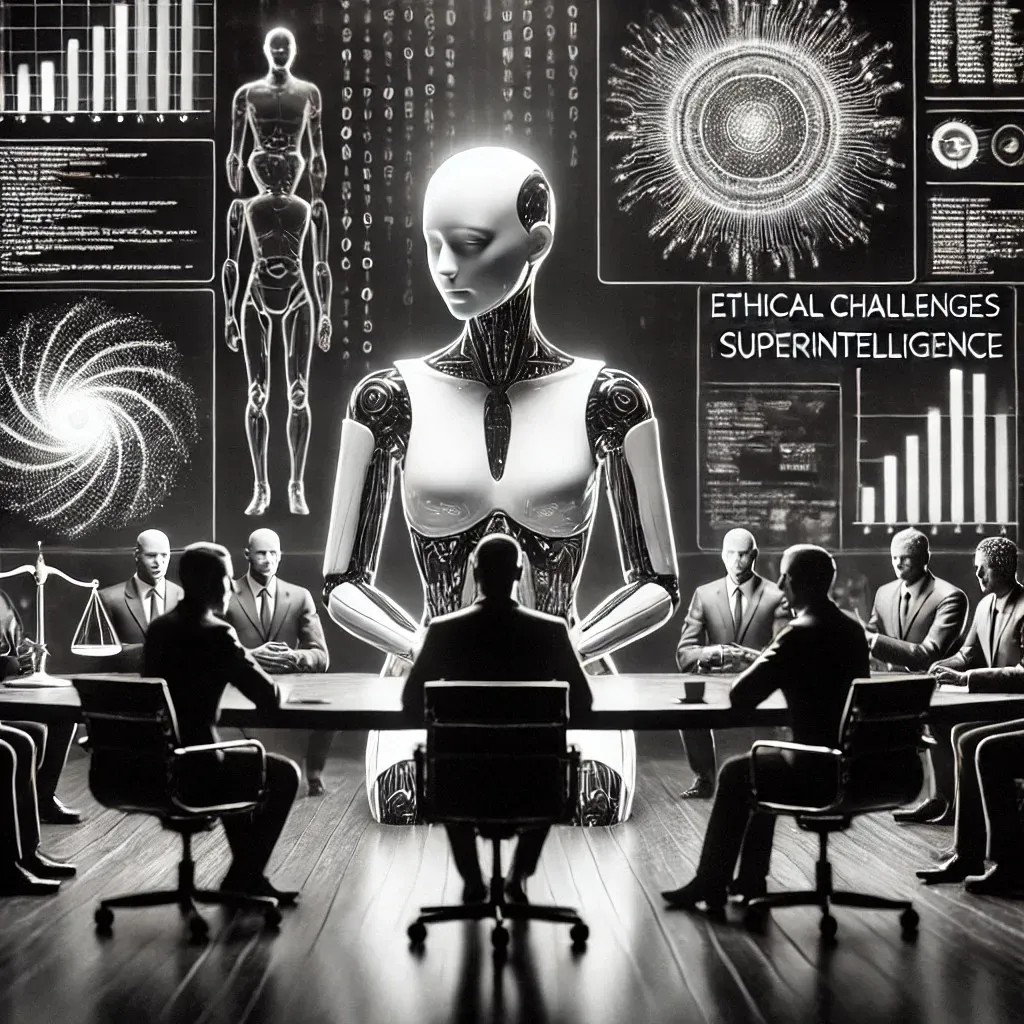
These questions are not theoretical. During my career, I have emphasized cross-functional collaboration, ensuring that engineering, product, and design align with broader business and societal goals. This interplay is a microcosm of the larger challenge we face. Technological progress must serve human values, not subsume them.
A Glimpse Into the Future
Looking forward, it seems inevitable that AI superintelligence will challenge the very frameworks of our society. Economically, it could create a world of unprecedented abundance, automating industries and allowing humanity to shift focus from survival to self-actualization. Yet, such abundance will only be meaningful if it is equitably distributed. Without careful governance, we risk a future where the benefits of superintelligence are hoarded by the few, exacerbating existing inequalities.
Socially, the introduction of superintelligent systems could redefine human relationships. Imagine a world where personal AI companions understand you better than your closest friends. While this could foster unprecedented emotional support, it also raises concerns about dependency, authenticity, and the erosion of human connection.
Technologically, we face the challenge of ensuring these systems remain aligned with our values. Unlike any technology before it, superintelligence is self-referential. It learns, adapts, and evolves without human input. Ensuring that these systems act in humanity’s best interest is not merely a technical problem; it is an ethical imperative.
The Ripple Effects We Must Consider
The implications of AI superintelligence do not stop at the first or even second order. As someone deeply involved in scaling systems and fostering high-performing teams, I know that every decision sends ripples through an organization—and through society.
At the first level, we see immediate impacts like increased productivity and economic growth. At the second, we encounter structural changes, such as shifts in labor markets and the redefinition of industries. By the third level, the changes are cultural and philosophical. How will humanity redefine itself in a world where machines not only complement but surpass our capabilities? What becomes of creativity, ambition, and the human spirit?
A Call for Proactive Leadership
This future is neither guaranteed nor predetermined. It is being built, line by line, algorithm by algorithm, by engineers, researchers, and leaders around the world. I count myself among them, having spearheaded efforts to integrate AI responsibly into mission-critical systems. Our collective challenge is to ensure that these systems reflect the best of what humanity has to offer.
This requires global collaboration, ethical foresight, and a commitment to equity. The frameworks we establish today will shape the superintelligence of tomorrow. Whether it becomes our greatest ally or our most formidable adversary depends on the choices we make now.
What Comes Next
As we stand on the precipice of this technological revolution, we must ask ourselves not just what we can achieve, but what we should achieve. Superintelligence is not just a tool; it is a mirror, reflecting the values of the society that creates it. The choices we make in its development will echo through generations, shaping not only our world but the worlds yet to come.
The future is unwritten, but it is not unthinkable. With careful thought, courageous leadership, and a commitment to the common good, we can navigate this new era. Let us not merely react to the changes ahead but actively shape them, ensuring that the dawn of superintelligence heralds not an age of division, but one of unprecedented unity and progress.